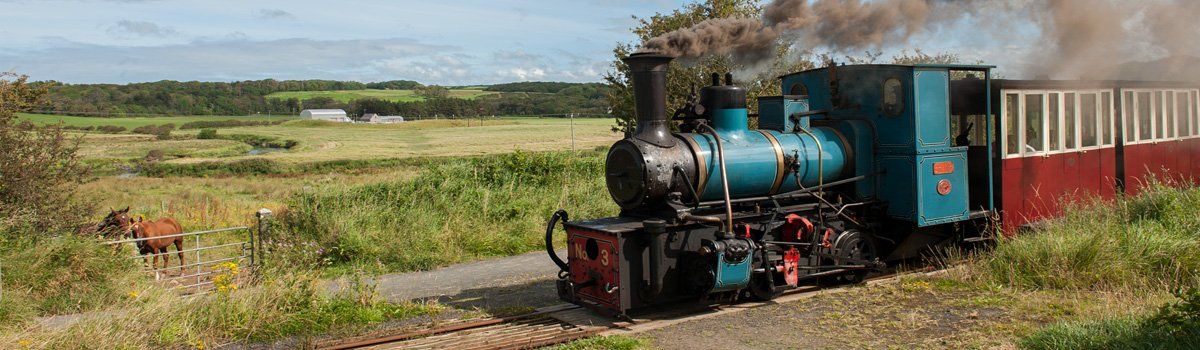
Part of the Causeway Tramway route was reopened in Spring 2002, the locomotives and rolling stock operating on the track came from Shane's Castle and include a Peckett 0-4-0 WT 'Tyrone' built-in 1904 for the British Aluminium Company, Larne, a Barclay 0-4-0WT 'Shane' built-in 1949 for Bord na Mona and a Simplex 'T' class diesel locomotive (Rory). An interesting fact - 'Shane' was one of three locomotives built by Andrew Barclay of Kilmarnock for use on the peat bog railway operated by Bord na Mona at Clonast and was specifically designed to burn peat. Before the initiation of the original Giants Causeway Tramway in 1883, there had been several meetings, engineer surveys and costing done to evaluate the feasibility of constructing a railway line along the coast from Portrush to Ballycastle, the idea was to link the commercial coal, bauxite, iron, limestone, lignite and basalt industries along the north coast with the commercial harbour of Portrush.
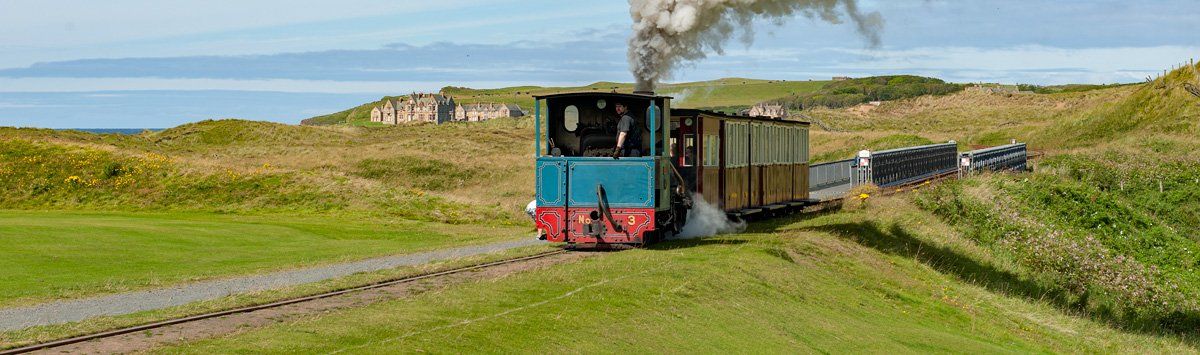
The ambitious proposal was shelved due to a lack of finance and doubts about the financial returns from such an investment. A narrow-gauge railway was eventually built from Ballycastle to Ballymoney via Armoy and Dervock. The Giant's Causeway Tramway was brought into being by the vision and enthusiasm of Col. William Traill of Ballylough who himself was a keen advocator of the railway and kept himself well informed on technological development in engineering. Sir Macnaghten of Dundarave was very opposed to the construction of the railway to the point that he diverted water from the river Bush above the Walkmill Falls in an attempt to lessen the flow. However, the tramway opened in 1883 and was hailed as the world’s first commercially run 'hydro-electric' powered tram system.