
Magnus Bearfoot
Magnus Bearfoot
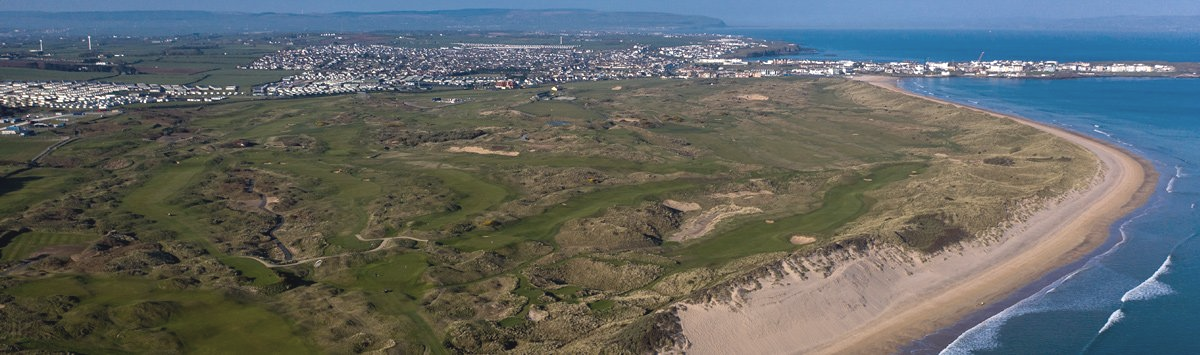
Magnus succeeded his father Olaf as King of Norway in 1093 and jointly ruled with his cousin Hakon. Hakon died of sickness in 1094, leaving Magnus the sole ruler of Norway. He invaded and consolidated Norwegian rule in the Scottish Isles, Hebrides, Orkneys, the Isle of Man and parts of Ireland. He also defeated the Norman Earls - Hugh of Chester and Hugh of Shrewsbury at Anglesey after responding to the Welsh call for help. He got the name Barefoot or Barelegs from the fact that he would wear a Scottish Kilt. There is no concrete evidence as to the exact location of his death but belief, folklore and conclusion point to a location known locally as the 'war hollow' which is situated within the Royal Portrush Golf Course.
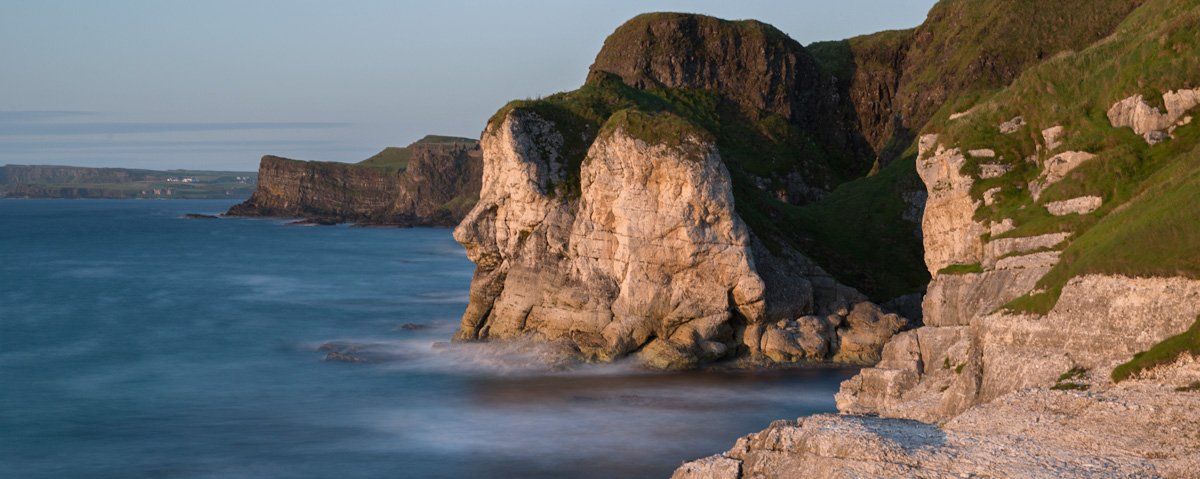
A battle took place here between an Irish army and Norse invaders around that period and related artefacts have been found there in the past, the landscape at that time would have been marshy and boggy amongst the dunes. It is written that Magnus landed in Ireland in 1102 and was joined in his conquest by the King of Connaught, whose daughter his son Sigurd had married. They took a large part of the country under their control including the area around Dublin, finally returning to spend the winter in Connaught. In the spring they set out north and took the greater part of Ulster after which the Connaught king returned home. Magnus had left forces in Dublin and brought his fleet of ships north and anchored them in the Skerry Roads.
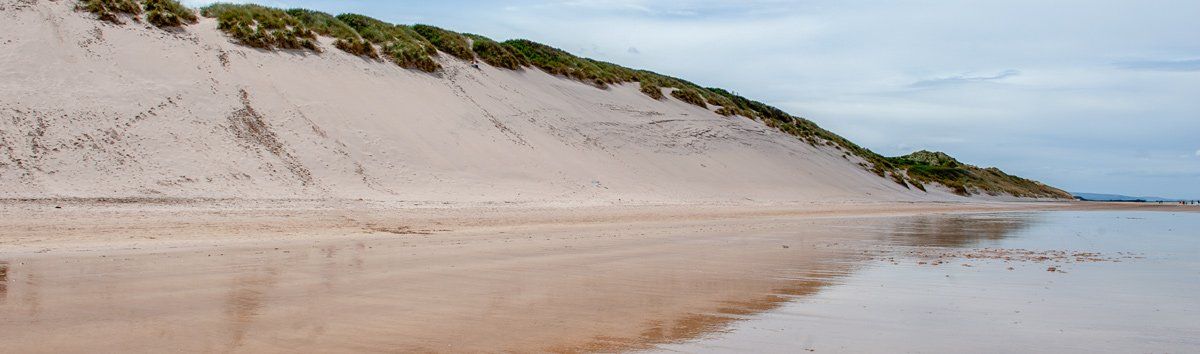
He was intending to sail for Norway but his army needed provisions for the journey, he sent a handful of men to the King of Connaught asking that cattle fit for slaughtering be sent and to have them arrive before the celebration of St. Bartholomew's (August 25th), it was said the sea was calm and the weather very warm at the time. When they didn't arrive on St. Bartholomew's Day, Magnus took a large contingent of his army and set off inland intending to forage the land for provisions. They proceeded through the marshy ground until they came to a height and sawdust rising in the distance, some thought it was an Irish army and others the overdue cattle, a debate took place between them and Magnus decided that they should prepare themselves in case it was the Irish army.
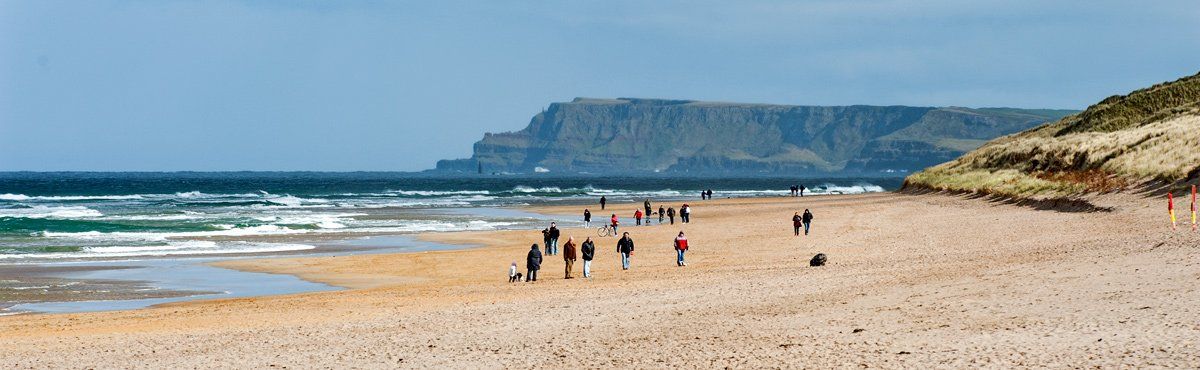
The king was described as being dressed thus: ' King Magnus had a helmet on his head; a red shield, in which was inlaid a gilded lion; and was girt with the sword of Legbit, of which the hilt was of tooth (ivory), and handgrip wound about with gold thread; the sword was extremely sharp. In his hand, he had a short spear, and a red silk short cloak over his coat, on which, both before and behind, was embroidered a lion in yellow silk; and all men acknowledged that they never had seen a brisker or stately man. Eyvind had also a red silk cloak like the king's; and he also was a stout, handsome, warlike man. Eventually, they saw it was their own men and the cattle herd sent by the king of Connaught, with relief they turned and headed back towards the shore and their fleet.
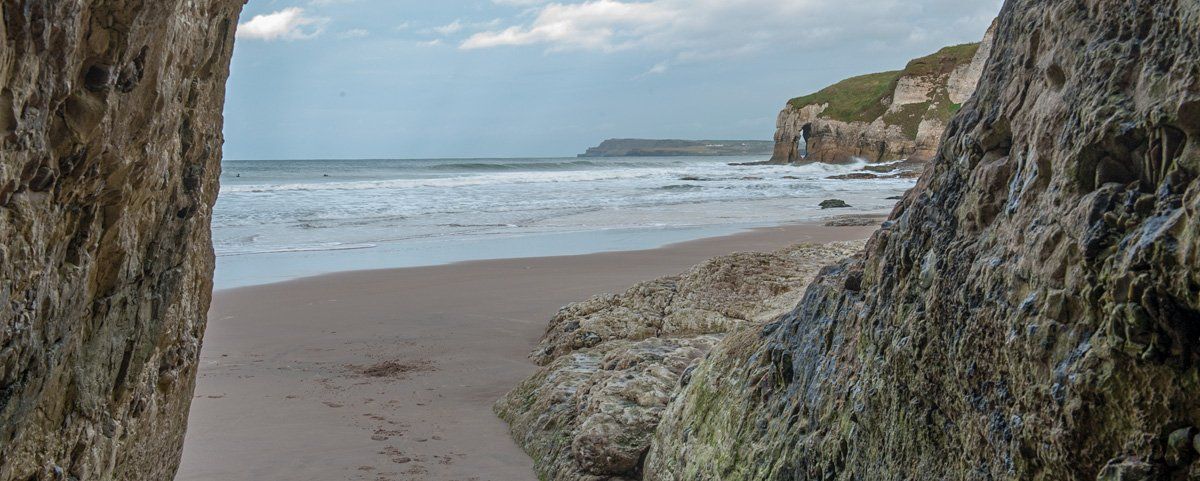
As they were making their way back through the marshy land they were attacked from all sides by a large force of Irish soldiers. Being trapped in boggy ground and unable to make headway, Magnus ordered Thorgrim Skinhufa and his division to try and get to the top of the largest dune and then counter-attack with bowmen, the king and the other divisions provided the cover for them to reach that objective but on reaching the top and seeing the ships they put their shields to their backs and ran for the boats, leaving Magnus and the other divisions still trapped in the marshland and having to fight every inch of their way.
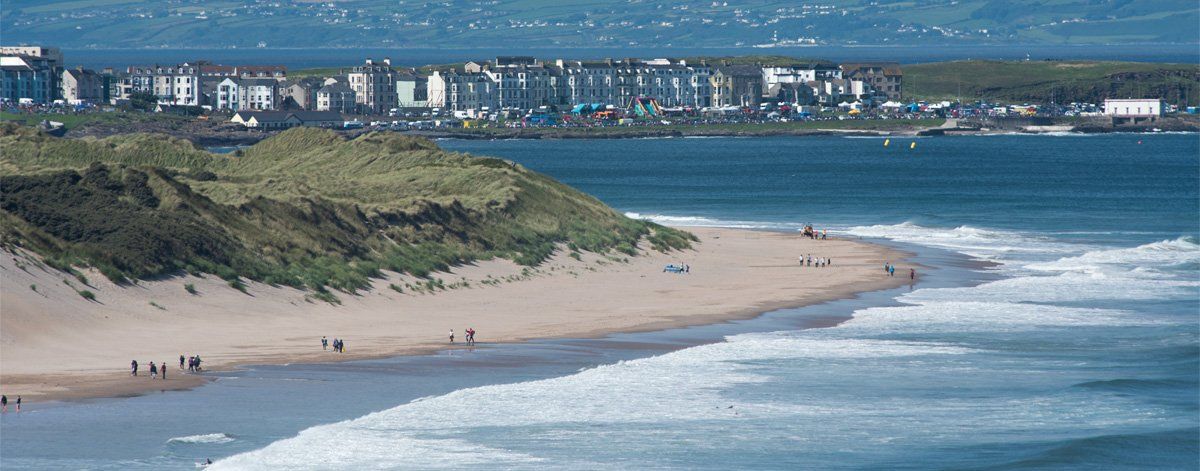
Large numbers on both sides were killed, Magnus was said to have been hit by a spear in the thigh but managed to break the shaft and continue to make his way towards the shore until he was finally killed by an axe blow to the head and died instantly, the attacker was immediately slain by Vikdun Jonson, a revered Norwegian warrior who had accompanied Magnus since leaving Norway. Vikdun was the last to flee from the battle and took the kings banner and sword with him to his ship, from where they immediately sailed for Scotland. Ref: The online Medieval and Classical Library - The Chronicles of the Kings of Norway.